- Quick Answers to the Most Common Currency Questions in Dubai
- What is the Official Currency in Dubai?
- Currency Exchange in Dubai: Best & Worst Options
- How to Avoid Extra Fees & Scams in Dubai
- Payment Methods in Dubai: What Actually Works Best
- Cash vs Card Payments in Dubai: What’s Better?
- How Much Money Do You Need in Dubai?
- Final Thoughts
- FAQ About Currency and Payments in Dubai
- Currency: UAE Dirham (AED)
- Exchange rate: 1 USD ≈ 3.67 AED
- Best payment method: Card + small amount of cash
- Cards accepted? Yes, almost everywhere (Visa & Mastercard)
- Cash needed? Yes, for taxis, tips, and local markets
Quick Answers to the Most Common Currency Questions in Dubai
Here are the quick answers to the most common currency questions in Dubai to help you save time, avoid fees, and plan your money smartly.
Dubai uses the United Arab Emirates Dirham (AED) as its official currency. The dirham is commonly written as AED, Dh, or Dhs, and it is pegged to the US dollar at about 1 USD = 3.67 AED. Credit and debit cards are accepted almost everywhere, but carrying some AED cash is useful for taxis, traditional markets, tips, and small purchases.
Use both. Cards work almost everywhere, but cash is still essential for taxis, souks, and tips. This balance is key when deciding between cash vs card payments.
Sometimes, but it’s not recommended. Exchange rates are usually poor, and change is given in AED.
Use ATMs instead of exchange counters, avoid airport rates, and always pay in AED, one of the most important travel money tips Dubai visitors should know.
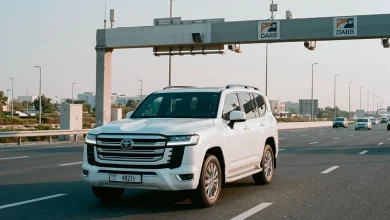
Planning to explore Dubai by car?
Compare available cars, rental options and current AED rates to find a convenient way to get around Dubai without relying on taxis for every trip.
What is the Official Currency in Dubai?
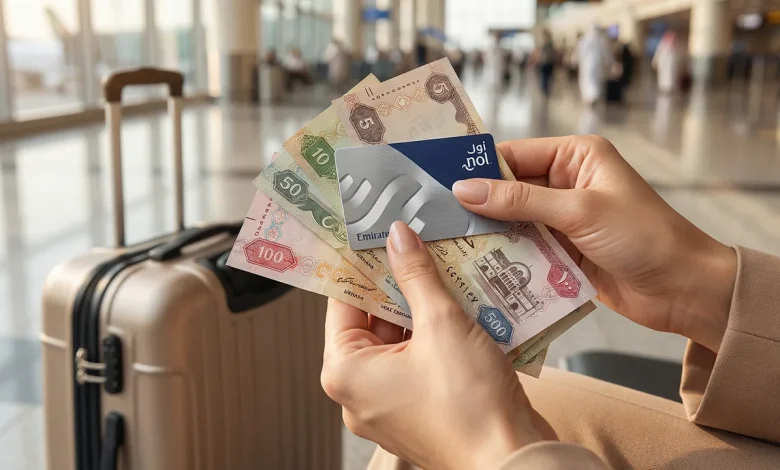
The official currency in Dubai is the UAE Dirham (AED). It is the only legal currency used for everyday transactions in Dubai. You may also see the dirham written as Dh or Dhs. The AED is pegged to the US dollar at approximately 3.67 AED per 1 USD.
The exchange rate is fixed:
1 USD ≈ 3.67 AED
This stability means prices in Dubai don’t fluctuate much, making it easier to plan your budget without worrying about currency changes.
What Currency Should You Bring to Dubai?
Dubai uses the UAE Dirham (AED), but you don’t necessarily need to arrive with dirhams in hand. You can use these currencies:
- USD → Best option: Widely accepted for exchange with the most competitive rates due to the fixed USD–AED relationship.
- EUR → Good: Easy to exchange, but usually with slightly lower rates than USD.
- GBP → Good: Commonly accepted at exchange offices across Dubai.
- Other currencies → Less ideal: May have limited availability or weaker exchange rates.
Should You Use Cash or Card in Dubai?
Mastercard are widely accepted in hotels, restaurants, shopping malls, attractions, and car rentals. However, it is still worth carrying some AED cash for small shops, traditional souks, tips, and situations where card payments are unavailable.
In about 80% of cases, your card will be all you need.
You can use your card for:
- Hotels
- Restaurants and cafés
- Shopping malls
- Attractions
- Car rentals
Note: Visa and Mastercard work almost everywhere, and contactless payments are the norm.
You’ll need Cash for:
- Small cafés or quick stops
- Taxis (especially older or independent ones)
- Traditional souks and small local shops
- Tips and small service payments

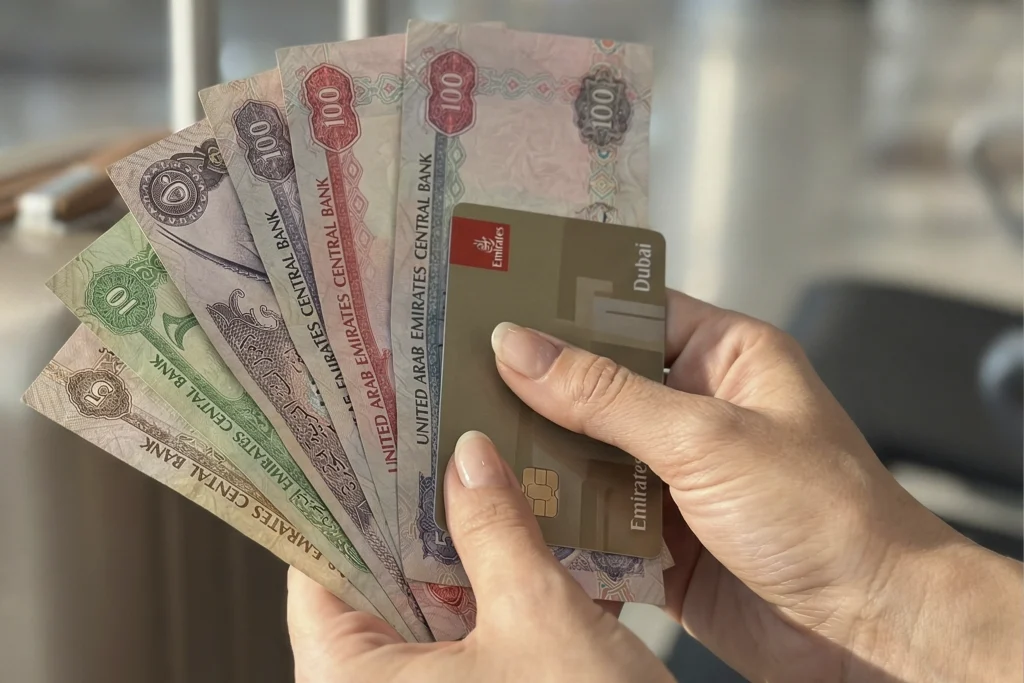
Currency Exchange in Dubai: Best & Worst Options
For most travelers, ATMs and licensed exchange offices in the city are better options than airport exchange counters. ATMs are convenient for withdrawing AED, while exchange offices in malls and central areas allow you to compare rates. If you need cash immediately after landing, exchange only a small amount at the airport and handle the rest in the city.
| Option | Why It’s Good / Bad | Best For |
|---|---|---|
| ✅ ATMs | Best exchange rates Widely available Fast and convenient | Most travelers who want easy AED withdrawals |
| 🟡 Exchange Offices (Malls & City) | Fair rates Safe Easy to compare options | People who prefer exchanging cash instead of withdrawing |
| ❌ Airport Exchange | High fees Poor exchange rates Less value for money | Only small emergency cash on arrival |
Smart tip: If you need cash at the airport, just exchange a small amount and handle the rest in the city where rates are better.
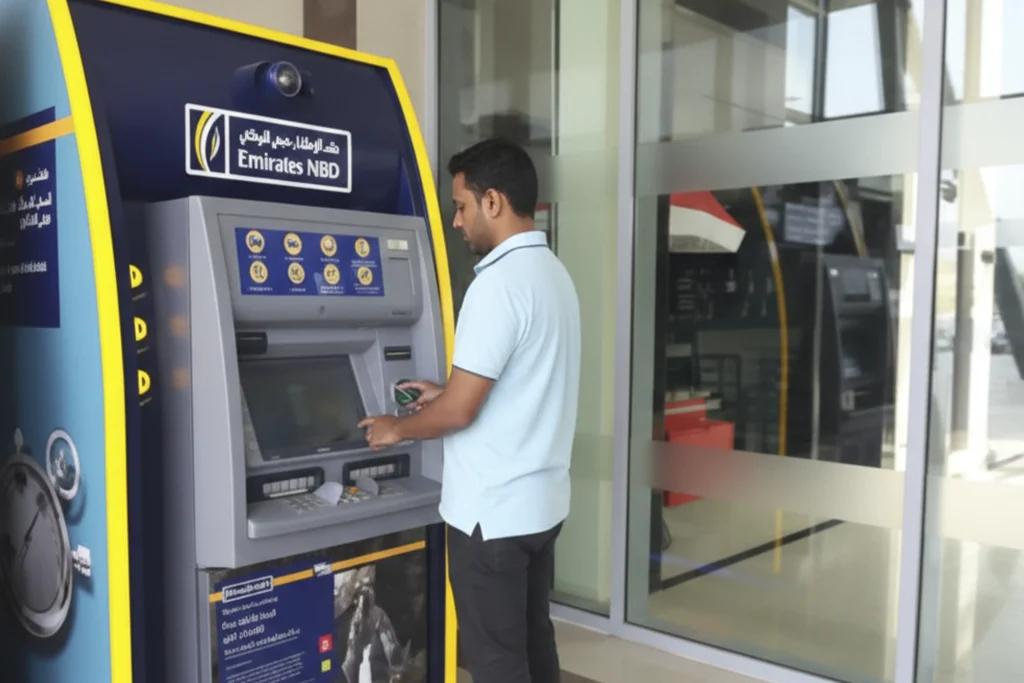
How to Avoid Extra Fees & Scams in Dubai
To reduce currency fees in Dubai, pay in AED when using a card or ATM, avoid unnecessary currency conversion at airport exchange counters, and use a card with low foreign transaction fees. If a payment terminal or ATM asks whether you want to be charged in your home currency or AED, choosing AED usually avoids the merchant or ATM operator’s dynamic currency conversion.
- Always choose AED when paying (avoid dynamic currency conversion): If a machine asks whether you want to pay in your home currency, always select AED. Otherwise, you’ll usually get a worse exchange rate.
- Avoid airport exchange counters when possible: They’re convenient, but usually offer the weakest rates and highest fees.
- Use cards with low or no foreign transaction fees: This can make a noticeable difference if you’re spending several days in Dubai.
- Withdraw larger amounts instead of small frequent withdrawals:This helps reduce ATM fees over your trip.
- Be careful with “help” at ATMs or payment machines:In busy tourist areas, always use machines independently and avoid accepting assistance from strangers.
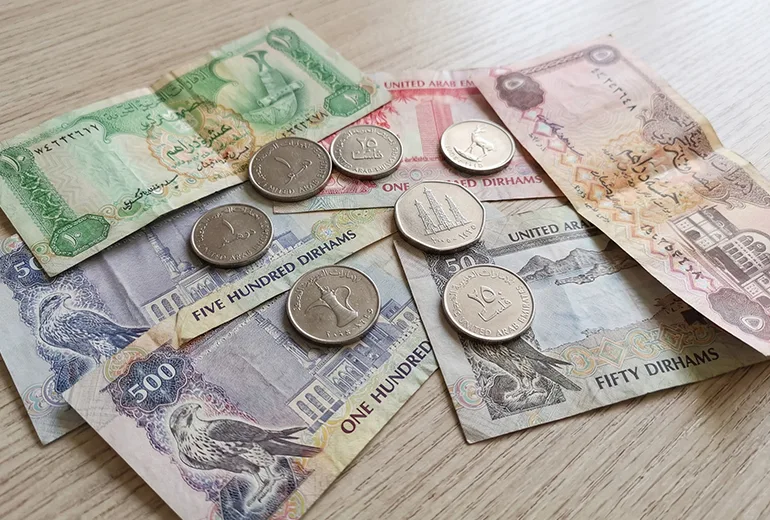
Smart Travel Money Tips for Dubai
A few simple habits can help you avoid unnecessary stress and manage your money better in Dubai:
- Carry only 1–2 days of cash to reduce risk
- Keep cash and cards in separate places
- Use cards for big payments and cash for small ones
- Track your daily spending to stay on budget
A practical UAE dirham (AED) usage tip: when withdrawing cash from an ATM, try to break large notes at supermarkets or malls early on so you’re not stuck with unusable bills later.
Payment Methods in Dubai: What Actually Works Best
The best payment strategy in Dubai is to use a Visa or Mastercard for most purchases and keep some AED cash for smaller payments. Contactless payments such as Apple Pay, Google Pay, and Samsung Pay are widely used, while cash remains useful for traditional markets, small shops, tips, and some transport-related payments.
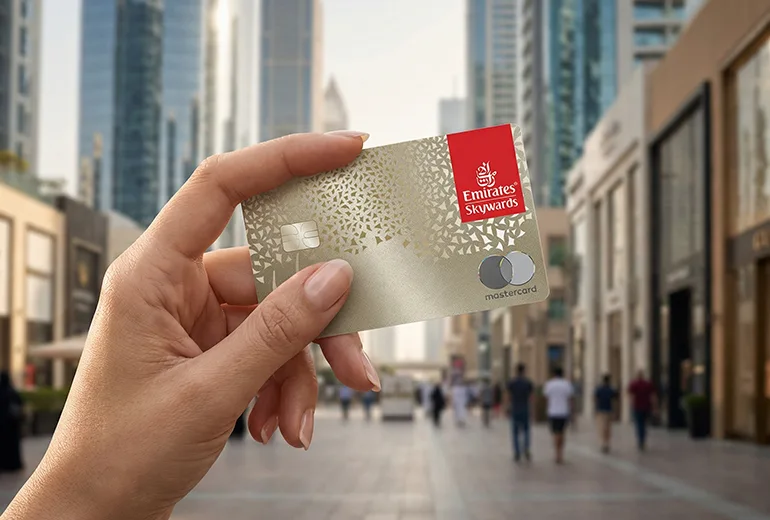
- Credit & Debit Cards (Visa, Mastercard): The most widely accepted payment method in Dubai. You can use them in hotels, restaurants, malls, and most tourist attractions.
- Mobile Payments (Apple Pay, Google Pay, Samsung Pay): Very common in Dubai. In many places, tapping your phone is faster than using a physical card.
- Cash (AED): Still useful for taxis, small local shops, traditional markets, and tipping.
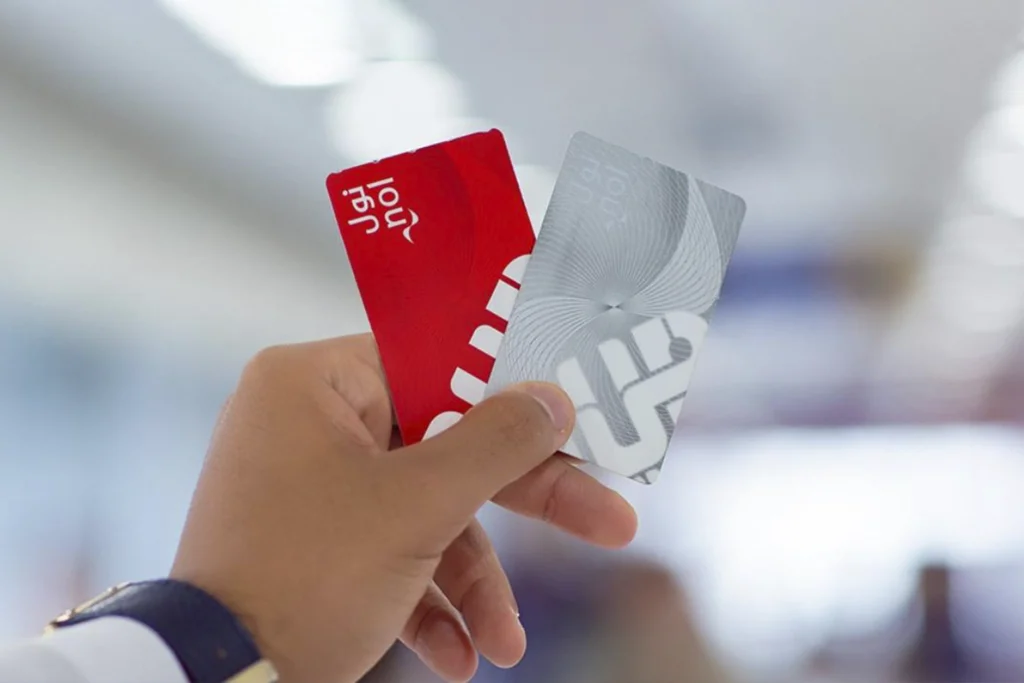
- Nol Card: A dedicated card for public transport like metro, buses, and trams in Dubai.
- Prepaid Travel Cards (Wise, Revolut, etc.): Useful for controlling your budget and avoiding high foreign transaction fees.

Cash vs Card Payments in Dubai: What’s Better?
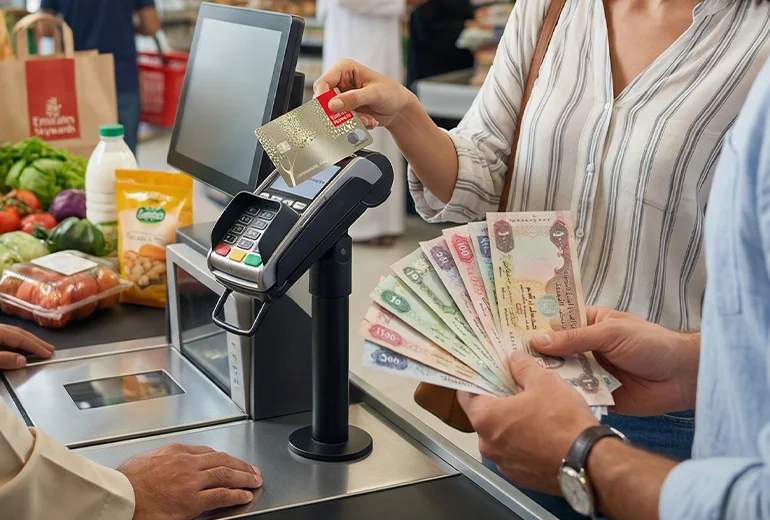
This table compares cash and card payments in Dubai, showing when each method works best and helping you choose the right approach for different situations.
| Feature | Cash (AED) | Card |
| Ease of use | Medium | High |
| Fees | None | Depends on your bank |
| Acceptance | Limited in malls | Accepted almost everywhere |
| Best for | Markets, taxis, tips | Hotels, dining, shopping |
| Safety | Lower if lost | Higher (can be blocked) |
The smartest approach isn’t choosing one methodو it’s combining both based on the situation, which is exactly how locals and experienced travelers handle payment methods in Dubai.
How Much Money Do You Need in Dubai?
A typical traveler can plan for around AED 300–600 per day for a mid-range Dubai trip, excluding accommodation and flights. Budget travelers may spend around AED 150–300 per day, while luxury travelers can spend AED 600 or more. Your actual budget depends mainly on dining, attractions, taxis, shopping, and accommodation.
| Travel Style | Daily Budget (AED) | Coffee | Meal | Taxi Ride |
| Budget | 150–300 | 15–20 | 40–60 | 20–40 |
| Mid-range | 300–600 | 20–25 | 60–100 | 40–70 |
| Luxury | 600+ | 25–30 | 100–120 | 70–80 |
When you see a hotel room, restaurant menu, taxi fare, or rent a car in Dubai, you can trust that the price won’t suddenly change due to exchange rate volatility. In everyday life, prices in Dubai are displayed in AED only.
Transportation Costs in Dubai (Taxi vs Car Rental vs Public Transport)
Taxis are convenient and widely available, but they can quickly add up if you’re traveling between multiple places throughout the day. Public transport is more affordable, but less flexible for exploring at your own pace.
On the other hand, car rental in Dubai can be a practical option for some travelers. It gives you full flexibility to explore the city at your own pace. For travelers visiting multiple attractions in a day, it can also be more convenient and often more cost-efficient than taking several taxi rides.
Unlike other options, you don’t have to worry about waiting times or fixed schedules, which makes planning your day much easier.
For short holidays and family trips, Car Rental Dubai for Tourists offers greater flexibility than relying on taxis or public transport, especially if you plan to visit several attractions in a single day.
Final Thoughts
So, in Dubai, which currency is used? The answer is clear: the United Arab Emirates Dirham (AED). Cards and mobile payments work almost everywhere, but cash still plays a key role in daily interactions, traditional markets, and tipping.
If you plan to rent a car in Dubai during your trip, paying in AED can simplify transactions and help you avoid extra conversion fees. Choosing a reliable car rental company makes the process smoother. For instance, working with a trusted provider like Saadatrent Dubai ensures seamless payments, faster checkouts, and peace of mind as you explore the city.
FAQ About Currency and Payments in Dubai
In most cases, exchanging money after arrival in Dubai gives you better rates. ATMs and local exchange offices usually offer more competitive rates than airport counters or foreign banks.
Credit cards are accepted in most hotels, restaurants, malls, and tourist attractions. However, small shops, traditional markets, and some taxis may still require cash.
US dollars, euros, and British pounds are the easiest currencies to exchange in Dubai. That said, withdrawing AED directly from ATMs is often the most convenient option.
Tourists generally cannot open local bank accounts. However, they can use international cards, mobile wallets, and prepaid travel cards without any issues.
For most travelers, carrying around AED 200–400 in cash is enough for a day of small purchases, taxis, tips, and other situations where cash is useful. You do not need to carry your entire travel budget in cash because cards are widely accepted across Dubai.
Dubai can be expensive or affordable depending on your choices. While luxury options are everywhere, budget-friendly food, transport, and shopping are also widely available.