UAE Speed Limits Guide 2026: Dubai, Abu Dhabi, Sharjah & Other Emirates

- UAE Speed Limits: Quick Answer
- How Speed Limits Work in the UAE
- Dubai Speed Limits
- Abu Dhabi Speed Limits
- Speed Limits in Sharjah, Ajman, Ras Al Khaimah, Fujairah and Umm Al Quwain
- Speed Limits by Road Type
- Speeding Fines and Black Points in the UAE
- Rental-Car Driver Tips
- Common Mistakes in UAE Speed Limits
- Conclusion
- Frequently Asked Questions About UAE Speed Limits
If you are going to get into your private or rented car in the next few hours and hit the road using a navigation app and following its suggested speed limit, you should know that the displayed speed may not match the current limit on the road. Speed limits vary by road and emirate, and relying on an outdated navigation app can lead to fines. In this post from Saadatrent, we will review speed limits in the UAE and explain the rules, common mistakes, and traffic fines drivers should know about.
UAE Speed Limits: Quick Answer
If you’re going to be driving in the UAE and are in a hurry, here is a quick summary of common speed-limit ranges:
- In cities: often between 40 and 80 km/h
- Main roads: often between 60 and 100 km/h
- Motorways: commonly between 100 and 140 km/h
- On some highways: higher limits may apply where officially posted
These are general ranges, not universal limits.
Planning to Drive in Dubai? Find the Right Rental Car
Explore cars for your Dubai trip with flexible rental options, convenient delivery and 24/7 support from Saadat Rent.
How Speed Limits Work in the UAE
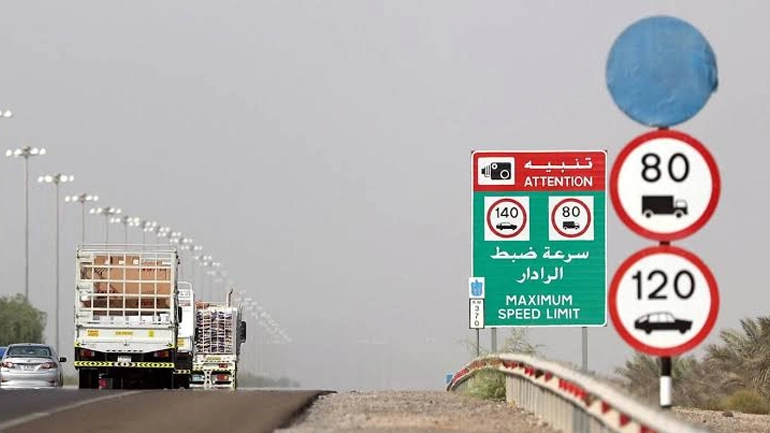
The UAE uses traffic cameras and electronic signs to monitor traffic and enforce speed limits. One important difference to understand when driving in the UAE is that the posted speed limit and the speed at which a camera may register a violation are not always the same.
If you are new to driving in the UAE, our guide to UAE driving rules can also help you understand the local road rules before starting your journey.
Posted Speed Limit vs. Camera Threshold
A camera threshold is not the same as the legal speed limit. Some emirates have historically allowed a margin above the posted limit for camera enforcement, but drivers should not assume that the same margin applies on every road or in every emirate.
The safest approach is to follow the speed limit shown on the roadside sign. Do not use a presumed camera threshold to decide how fast to drive.
Radar Threshold
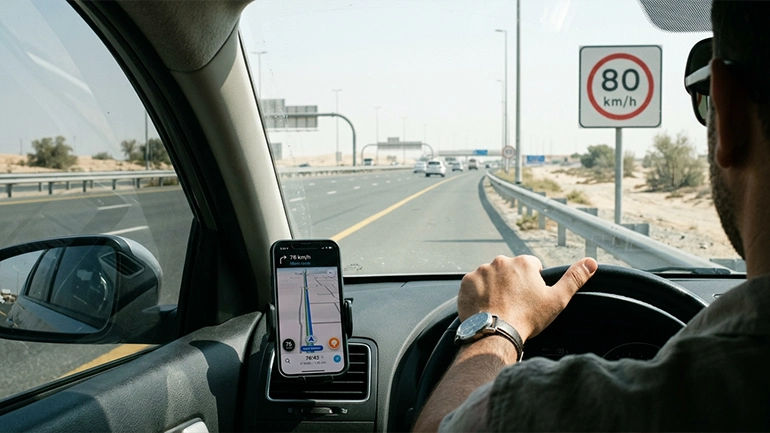
Dubai road-speed information and camera-enforcement thresholds may differ. The speed limit can also change depending on the road section, direction of travel, construction work and temporary traffic conditions.
Navigation apps can help you plan your route, but their information may not reflect the latest changes. Always trust the current roadside signs over a speed displayed in an app.
Dubai Speed Limits
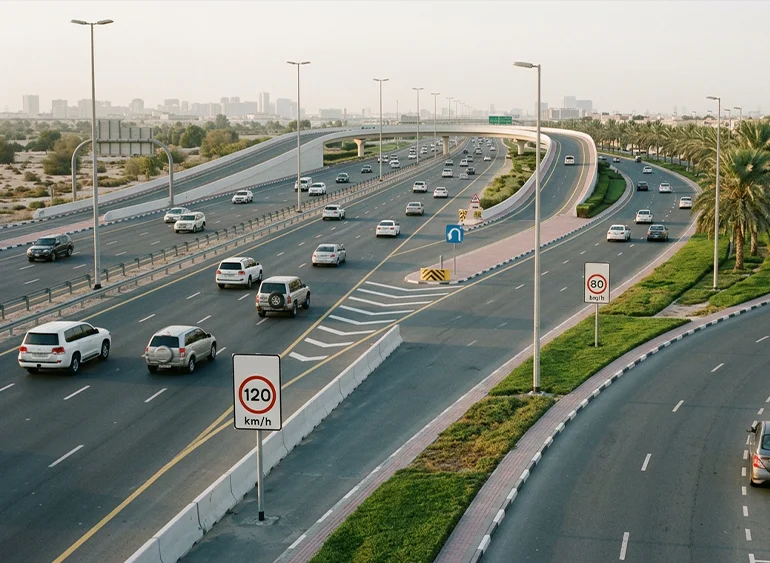
The RTA regularly reviews speed limits on Dubai roads. The following examples are based on published RTA announcements. They apply to the specified road sections; they are not a complete list of Dubai’s speed limits.
| Road section | Posted speed limit | Official source |
|---|---|---|
| Al Ittihad Road, on the section between Sharjah and Al Garhoud Bridge | 80 km/h | RTA announcement |
| Sheikh Zayed bin Hamdan Al Nahyan Street, between Dubai–Al Ain Road and Academic City Roundabout | 100 km/h | RTA announcement |
| Sheikh Zayed bin Hamdan Al Nahyan Street, between Academic City Roundabout and Al Khawaneej Street | 90 km/h | RTA announcement |
| Al Amardi Street, between Al Khawaneej Street and Emirates Road | 90 km/h | RTA announcement |
The road information above was checked on 13 October 2026. Always follow the signs currently displayed on the road, as limits may change.
Dubai has historically applied a 20 km/h difference between the posted limit and the camera-enforcement threshold on many roads. However, this should not be treated as an official speed allowance or assumed to apply everywhere. Never use the buffer as your target driving speed.
Abu Dhabi Speed Limits
| Road section | Speed limit |
|---|---|
| Sheikh Zayed Road, from Al Saada Bridge to the main tunnel | 80 km/h |
| Sheikh Zayed Road, after the main tunnel | 60 km/h |
| Abu Dhabi–Al Ghuwaifat Road, from Al Dhafra Bridge diversion to Baynunah Forest | 100 km/h |
| Abu Dhabi–Al Ghuwaifat Road, from Baynunah Forest to Barakah | 120 km/h |
| Abu Dhabi–Al Ghuwaifat Road, from Barakah to Al Ghuwaifat | 100 km/h |
| Sheikh Mohammed bin Rashid Road, designated fast lanes | Maximum 140 km/h; minimum 120 km/h on the two leftmost lanes |
Important: The figures above come from official Abu Dhabi Police announcements, but some announcements date back to 2013–2023. They should not be presented as independently verified current limits. Drivers must follow the posted road signs. Abu Dhabi also has no general speeding buffer; the posted limit is the maximum permitted speed.
Planning to drive in Abu Dhabi? Explore our car rental in Abu Dhabi options before your trip.
Speed Limits in Sharjah, Ajman, Ras Al Khaimah, Fujairah and Umm Al Quwain
| Road section | Posted speed limit |
|---|---|
| Sharjah: Individual roads across the emirate | Varies by road |
| Ajman: Sheikh Mohammed bin Zayed Road | 120 km/h |
| Ajman: Al Ittihad Street | 80 km/h |
| Ajman: Gulfa Street | 60 km/h |
| Ras Al Khaimah: Sheikh Saqr bin Mohammed Street, from Applied Technology Schools to Al Kharan Roundabout | 80 km/h |
| Ras Al Khaimah: Sheikh Mohammed bin Salem Street, from Al Riffa Roundabout to Marjan Island Roundabout | 80 km/h |
| Fujairah: Fujairah–Khorfakkan Road | 100 km/h* |
| Umm Al Quwain: King Faisal Street, from Union Bridge to Sheikh Sultan bin Ahmed Al Mualla Roundabout | Check posted road signs |
Note: Speed limits may change by road section and over time. The Fujairah figure requires confirmation against the latest official announcement, and the Umm Al Quwain data does not clearly establish the posted limit for the specified section. Drivers should always follow the signs on the road.
If your trip includes Sharjah or Ajman, you can explore our car rental in Sharjah and car rental in Ajman options.
Speed Limits by Road Type
The following table summarizes common speed-limit patterns without treating them as fixed limits for every road. It replaces the earlier duplicate road-type table so that the article does not present conflicting figures.
| Road type or area | General guidance | Important note |
|---|---|---|
| Residential areas | Often 25–40 km/h | Follow the posted limit, especially around pedestrians. |
| School zones | Often 30–40 km/h | Temporary or local limits may differ. |
| Urban roads | Often 60–80 km/h | Limits vary by road section. |
| Urban highways | Often 80–120 km/h | Follow the signs for the specific road. |
| Intercity highways | Often 100–140 km/h | Do not assume the highest range applies to every section. |
| Construction zones | Follow temporary signs | Temporary signs take priority over general expectations. |
These ranges are for general guidance only. They do not replace the posted speed limit or establish a camera threshold.
For more details about speeding penalties, Black Points and vehicle impoundment, see our UAE traffic fines guide.
Speeding Fines and Black Points in the UAE
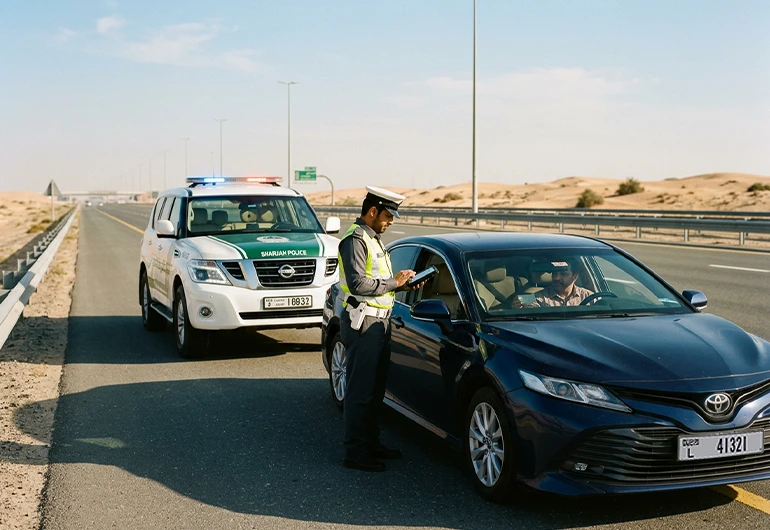
Now, let’s get to the part that no driver wants to deal with, but it is in your best interest to understand. Speeding fines increase as the amount by which a driver exceeds the applicable speed limit increases. Serious violations can also result in black points and vehicle impoundment.
The following table summarizes the commonly published speeding-penalty schedule. The exact handling of a violation can depend on the applicable regulations and enforcement authority, so check the official traffic-fines service for your case.
| Speeding violation | Fine amount (AED) | Black points | Vehicle impoundment |
|---|---|---|---|
| Exceeding the limit by up to 20 km/h | 300 | None listed in the standard schedule | None listed |
| Exceeding the limit by more than 20 and up to 30 km/h | 600 | None listed in the standard schedule | None listed |
| Exceeding the limit by more than 30 and up to 40 km/h | 700 | None listed in the standard schedule | None listed |
| Exceeding the limit by more than 40 and up to 50 km/h | 1,000 | None listed in the standard schedule | None listed |
| Exceeding the limit by more than 50 and up to 60 km/h | 1,500 | 6 | 15 days |
| Exceeding the limit by more than 60 and up to 80 km/h | 2,000 | 12 | 30 days |
| Exceeding the limit by more than 80 km/h | 3,000 | 23 | 60 days |
For official information, consult the UAE legislation penalty schedule and the relevant emirate’s traffic-fines service. Do not assume that every emirate applies identical administrative procedures.
For a more detailed breakdown of toll rates and rental-car charges, read our guides to Salik toll charges in Dubai and Abu Dhabi Darb toll charges.
Abu Dhabi Fine Discount Tip
Abu Dhabi Police has announced discounts for eligible traffic fines paid within specified periods. The applicable discount and exclusions can depend on the violation and the current policy. Check the official Abu Dhabi Police or TAMM service before relying on a particular percentage.
Black Points Explained
Black points are recorded against a driver’s licence. Accumulating 24 black points can lead to licence suspension under UAE traffic rules. The consequences and procedures depend on the driver’s record and the applicable authority.
If you drive a rental car, do not assume that a violation will remain attached only to the vehicle. The rental company may receive the violation first, but the responsible driver may still be required to deal with the associated penalties.
Since rules and fine amounts can change, check the latest status of your fines through the Dubai Police app, the RTA portal, or TAMM in Abu Dhabi.
Rental-Car Driver Tips
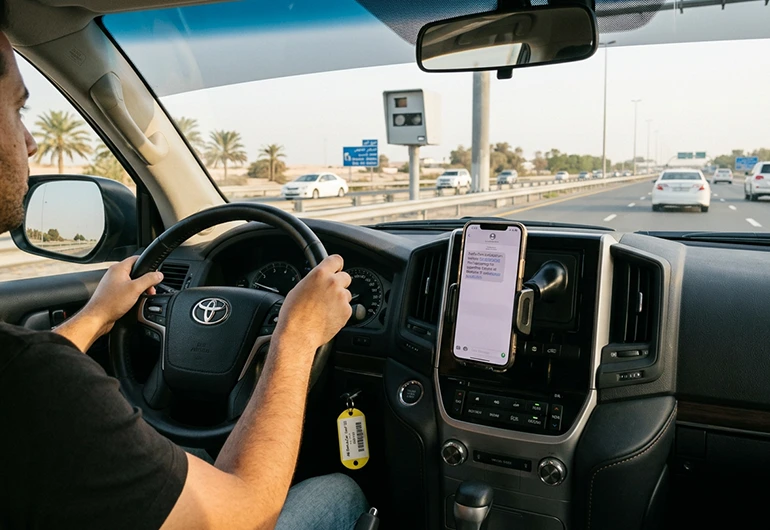
If you have rented a car in the UAE or are planning to rent one, keep these things in mind.
1. Traffic Fines and Charges
Traffic cameras can record violations against a rental vehicle, and the rental company may receive the notice as the registered owner. Check your rental agreement to understand how fines are notified, paid and charged to you.
2. Rental Company Administrative Fees
Some rental companies charge an administrative fee in addition to the traffic fine. The amount and calculation method vary by company, so check the agreement rather than assuming a standard percentage or fixed fee.
3. Deposit Return Period
The time required to return a rental deposit or release a temporary hold depends on the rental company, payment method and any outstanding traffic fines or tolls. Confirm the applicable timeframe before booking.
4. Road Toll Systems
Salik is Dubai’s electronic road-toll system. Darb is a separate toll system in Abu Dhabi. Rental companies may handle toll charges according to their own billing policies, so check how charges are recorded and settled before you drive.
Salik uses variable toll rates based on the time and day of travel. The UAE government states that 5% VAT applies to variable Salik toll charges from 1 June 2026. Darb charges AED 4 per crossing during applicable peak hours, currently 7–9 am and 3–7 pm from Saturday to Thursday, with Sundays and official holidays generally toll-free. Check the official UAE roadways information and Abu Dhabi Mobility Darb fees for current details.
5. Smart Use of Cruise Control
Cruise control can help maintain a steady speed on long highways, but it does not replace the driver’s responsibility to monitor road signs. Set it at or below the posted speed limit and reduce speed when conditions require it. Do not set it to a presumed camera-buffer number.
6. Speed Warnings and Vehicle Trackers
Some vehicles have speed-warning systems, and some rental companies may use tracking technology under their rental terms. Features vary by vehicle and company. Ask about the equipment and applicable policies when collecting the car.
7. Vehicle Impoundment
Serious speeding violations can result in vehicle impoundment. If you are driving a rental car, ask the rental company how impoundment-related procedures and charges are handled under its agreement. Do not assume a particular daily fee or “smart impound” charge applies to every company.
8. Police Report for Accidents
If you have an accident, follow the instructions of the police and your rental company. A police report may be required for insurance and rental procedures. Use the relevant official accident-reporting service and do not assume that insurance will cover damage without the required documentation.
Ready to Drive? Choose Your Car.
Know the speed limits. Pick the right car. Start your UAE trip with Saadat Rent.
Browse Saadatrent Cars →Common Mistakes in UAE Speed Limits
We always remind our customers at Saadat Rent who plan a car rental in Dubai or any other emirate about several common mistakes, including:
- Thinking that 20 km/h is always allowed: This is a common misconception. Do not treat a camera buffer as permission to exceed the posted speed limit.
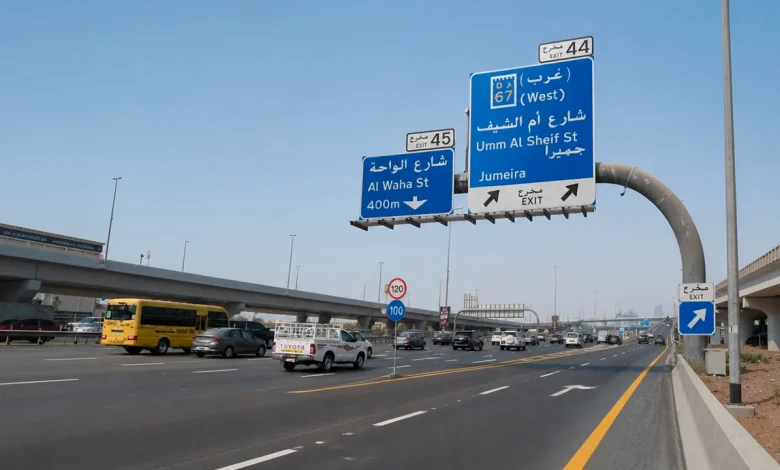
- Not paying attention to sudden changes in signs: In the UAE, the speed limit can drop near exits, junctions or construction zones. Watch for changes and adjust your speed in time.
- Trusting Google Maps or GPS completely: Navigation apps may not reflect the latest changes. Road signs take priority.
- Driving at high speed in the wrong lane: Follow lane-discipline rules and move to the appropriate lane when you are not overtaking. Avoid blocking faster-moving traffic or making sudden lane changes.
- Tailgating: Keeping too little distance from the vehicle in front can be dangerous and may lead to a separate traffic violation, even when you are within the speed limit.
- Ignoring construction zones: Temporary speed limits are important, particularly where lanes narrow or road conditions change.
- Assuming the rules are the same in every emirate: Speed limits and enforcement practices can differ. Check the signs whenever you enter a new emirate.
To recognize speed-limit signs and other road signs more easily, see our guide to UAE traffic signs and meanings.
Conclusion
Driving a modern car on UAE roads can be an enjoyable experience as long as you follow the driving laws, especially the speed limits in the UAE. As a final piece of advice, always trust the road signs rather than your memory or the suggestions of navigation apps. This can help you avoid fines and black points and, more importantly, make your journey on UAE roads safer and more relaxed.
Frequently Asked Questions About UAE Speed Limits
1. What is the maximum speed limit in the UAE?
There is no single maximum speed limit for all roads in the UAE. Limits vary by road and emirate, so always follow the posted signs, especially on highways, residential streets and roads undergoing construction.
2. Does Dubai have a 20 km/h speed buffer?
Dubai has historically applied a 20 km/h difference between the posted speed limit and the speed at which many speed cameras issue fines. However, drivers should not rely on this buffer as permission to exceed the posted limit. Always follow the road signs.
3. Are speed limits the same in Dubai and Abu Dhabi?
No. Speed limits and enforcement practices can differ between emirates. Abu Dhabi does not apply Dubai’s general 20 km/h speed buffer, so drivers should stay within the posted limit and check the signs whenever they cross into another emirate.
4. Can I rely on Google Maps to know the speed limit in the UAE?
Navigation apps can help you plan your route, but their displayed speed limits may be outdated or inaccurate. Always give priority to official roadside signs, particularly after junctions, near construction zones and when entering a different emirate.
5. Where can I check speeding fines in the UAE?
You can check traffic fines through the relevant emirate’s official police or traffic authority services. For current fine amounts, black points and vehicle impoundment rules, consult the official service for the emirate where the violation occurred.