- Quick Answers to the Most Common Currency Questions in Dubai
- Understanding Dubai’s Official Currency
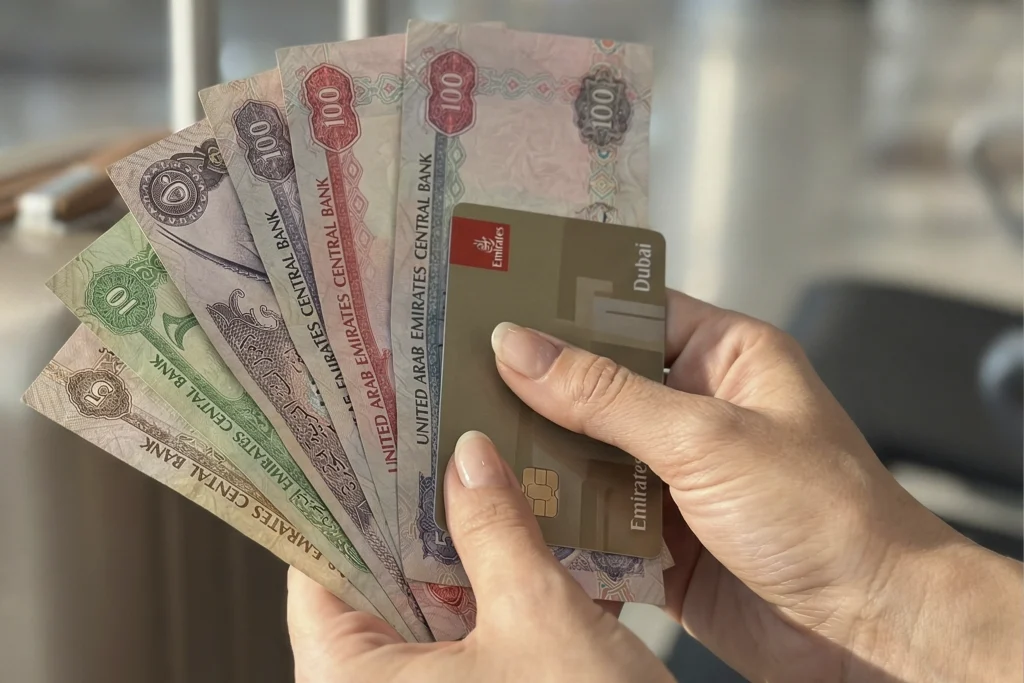
- Dubai’s Banknotes and Coins You’ll Use in Everyday Situations
- Payment Methods in Dubai: What Actually Works Best
- Can You Pay With US Dollars or Other Foreign Currencies?
- Currency Exchange in Dubai: Where and How to Do It Right
- How to Avoid Extra Currency Fees and Hidden Charges
- Tipping Culture in Dubai
- Cash vs Card Payments in Dubai: What’s Better?
- Practical Travel Money Tips for Dubai Visitors
- Final Thoughts
- FAQ About Currency and Payments in Dubai
In Dubai, the official currency is the United Arab Emirates Dirham (AED). Use cards for hotels, malls, and big purchases, but keep some AED cash for taxis, local markets, and tips.
ATMs usually offer better exchange rates than airport counters, and using a mix of cash, credit/debit cards, and contactless payments ensures smooth transactions throughout your trip.
Quick Answers to the Most Common Currency Questions in Dubai
Here are the quick answers to the most common currency questions in Dubai to help you save time, avoid fees, and plan your money smartly.
Dubai uses the United Arab Emirates Dirham (AED) as its only official and legal currency. If you’re wondering in Dubai which currency is used for daily transactions, the answer is always AED.
Use both. Cards work almost everywhere, but cash is still essential for taxis, souks, and tips. This balance is key when deciding between cash vs card payments.
Sometimes, but it’s not recommended. Exchange rates are usually poor, and change is given in AED.
Use ATMs instead of exchange counters, avoid airport rates, and always pay in AED, one of the most important travel money tips Dubai visitors should know.
Understanding Dubai’s Official Currency
Dubai, like the rest of the United Arab Emirates, uses the United Arab Emirates Dirham (AED), often referred to in guides as the UAE dirham. You may see it written as AED, Dh, or Dhs. The dirham is divided into 100 fils and has been the country’s official currency for decades.
Why the AED Is Stable and What That Means for Your Budget
One important detail that works in your favor as a traveler, and is often highlighted in any reliable Dubai currency guide, is that the AED is pegged to the US dollar. The exchange rate is fixed at approximately:
1 USD = 3.67 AED
This peg keeps the dirham extremely stable. Prices don’t fluctuate wildly due to currency exchange rates, making budgeting much easier for visitors.

How Prices Are Displayed and What You Actually Pay
When you see a hotel room, restaurant menu, taxi fare, or rent a car in Dubai, you can trust that the price won’t suddenly change due to exchange rate volatility.
In everyday life, prices in Dubai are displayed in AED only. Even when some luxury hotels or tourist-focused businesses show approximate USD or EUR prices, the actual transaction is processed in dirhams, reinforcing why understanding in Dubai which currency is used really matters.
Dubai’s Banknotes and Coins You’ll Use in Everyday Situations
Dubai’s cash system is simple, but knowing which denominations are most practical makes daily spending smoother, especially when applying smart UAE dirham (AED) usage tips.
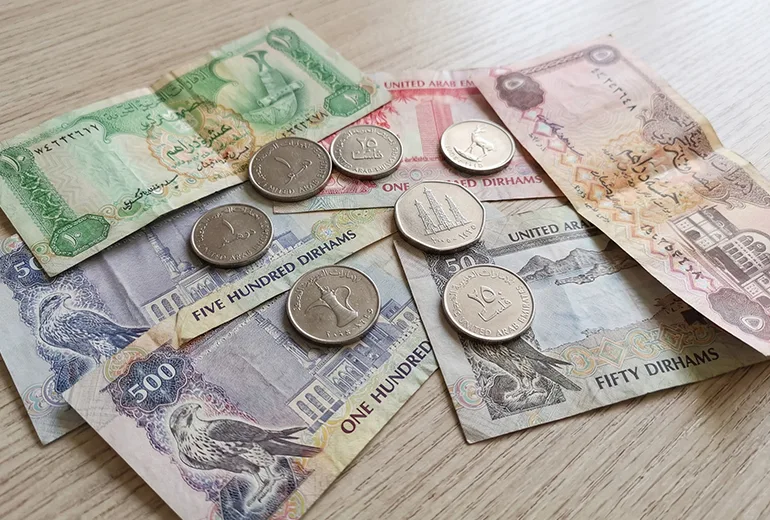
Banknotes are commonly in circulation
- 5 AED
- 10 AED
- 20 AED
- 50 AED
- 100 AED
- 200 AED
- 500 AED
- 1,000 AED
Coins
- 1 AED
- 50 fils
- 25 fils
For tourists, small notes matter most. You’ll use 10, 20, and 50 AED notes constantly for taxis, cafés, tips, and small purchases. Large notes like 500 or 1,000 AED are accepted but can be inconvenient, especially in taxis or small shops that may not have enough change.
A practical UAE dirham (AED) usage tip: when withdrawing cash from an ATM, try to break large notes at supermarkets or malls early on so you’re not stuck with unusable bills later.
Payment Methods in Dubai: What Actually Works Best
Dubai is one of the most payment-friendly cities in the world. Cashless payments are the norm, especially in modern and tourist-heavy areas, which is why payment methods in Dubai are often praised by travelers.
1- Credit and Debit Cards
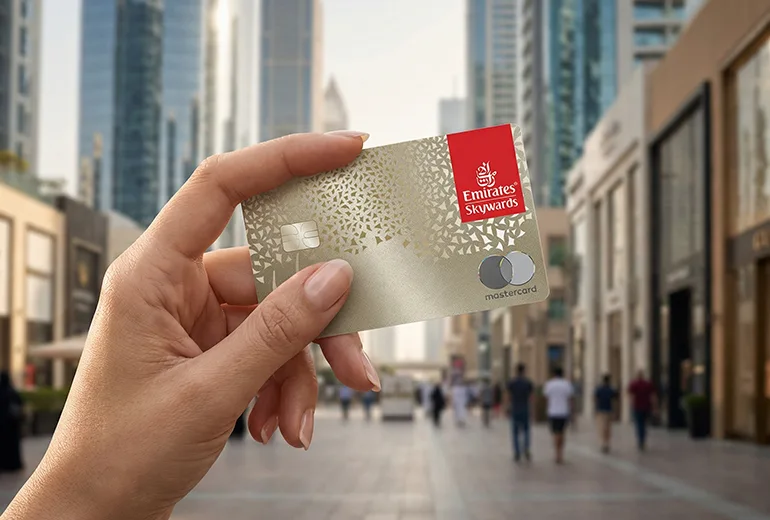
Visa and Mastercard are accepted almost everywhere, making credit cards in the UAE extremely reliable for tourists:
- Hotels and resorts
- Restaurants and cafés
- Shopping malls
- Attractions and theme parks
- Supermarkets
- Ride-hailing apps
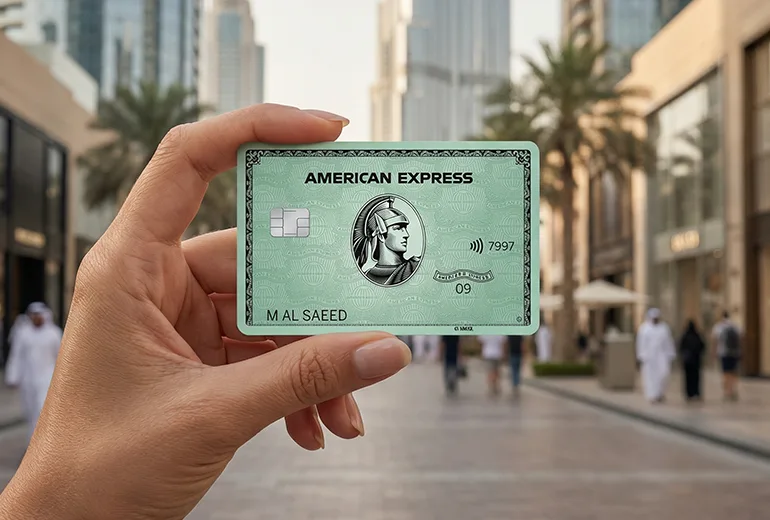
2- American Express
American Express is also widely accepted in Dubai, though not as universally as Visa or Mastercard. You can usually use it at larger hotels, shopping malls, and major restaurants, but some smaller shops and taxis may not accept Amex. Always carry an alternative card, such as Visa or Mastercard, to avoid inconvenience.

3- Contactless Payments and Mobile Wallets
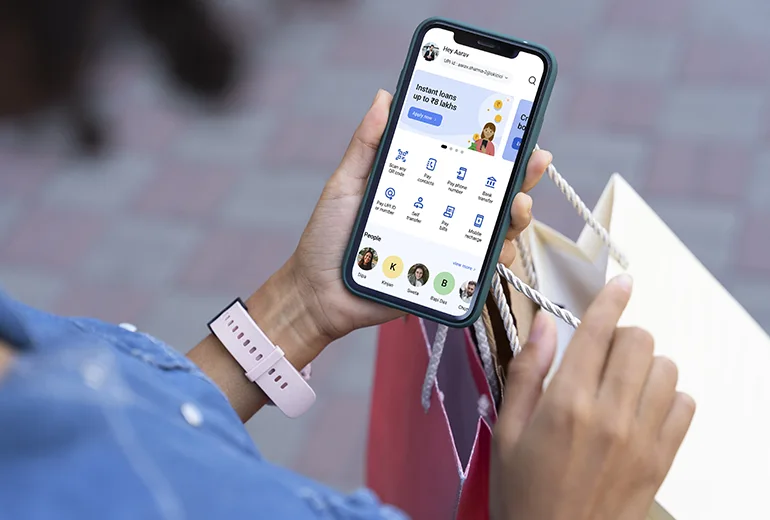
Contactless payments are extremely common. You can comfortably pay using:
- Apple Pay
- Google Pay
- Samsung Pay
- Contactless debit or credit cards
In many places, tapping your phone or card is faster than paying with cash, and staff often expect card payments by default, a major advantage of modern payment methods in Dubai.
4- Cash!
Cash hasn’t disappeared, and ignoring it can be inconvenient, especially when comparing cash vs. card payments in real-world situations. Cash is still important for:
- Taxis (especially independent or older vehicles)
- Traditional souks (gold, spice, textile markets)
- Small cafés, kiosks, and local shops
- Tips and small service payments
- Situations where card machines are temporarily unavailable
If you plan to explore older neighborhoods like Deira or Bur Dubai, especially if you rent a car in Deira for easy access, and enjoy bargaining at local markets, cash becomes even more important.
A smart strategy, often recommended in travel money tips for Dubai, is to use cards for planned, high-value expenses and cash for spontaneous, small, or traditional transactions.
5- “Nol Card” for Public Transport and Parking
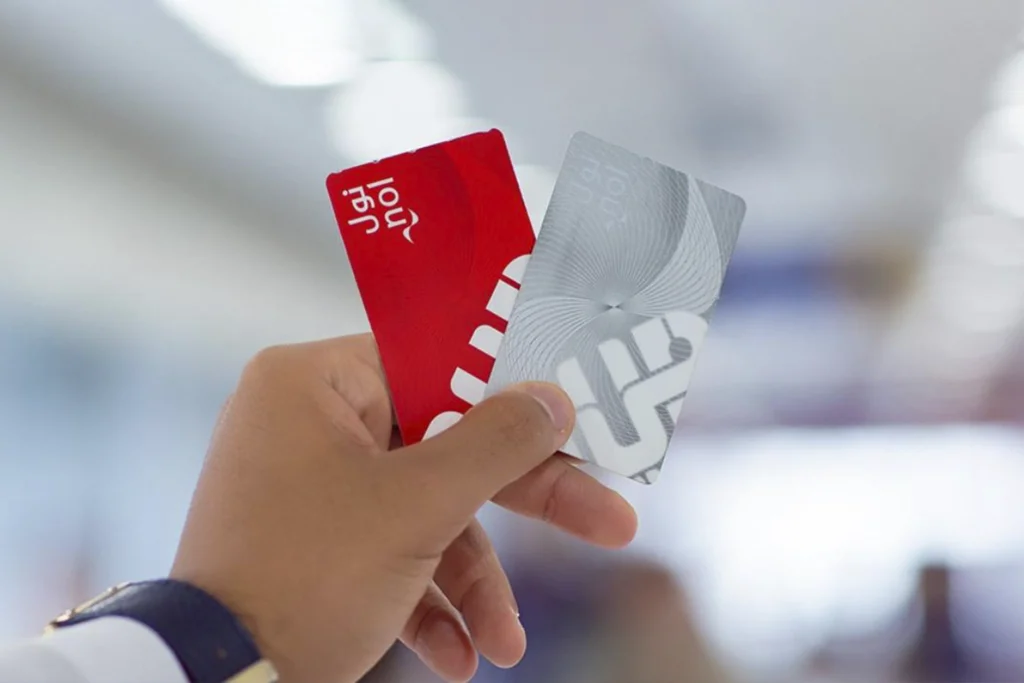
Dubai’s public transport system, including metro, buses, trams, and some parking zones, uses a dedicated Nol Card. Some stations accept contactless payments, but having a Nol Card ensures smoother daily commuting. It is essential for frequent travelers using public transport
6- Prepaid Travel Cards and Digital Wallets
Many travelers prefer prepaid multi-currency travel cards or digital wallets like Wise, Revolut, or PayPal-linked cards.
- Let you pay in AED while avoiding high currency conversion fees
- Can be used in shops, restaurants, and online bookings
- Offer better spending control and transparency, a top UAE dirham (AED) usage tip
7- Bank Transfers and Online Payments
For larger payments such as car rental in Dubai, tours, or hotels booked online:
- Direct bank transfers and online payment gateways are widely used
- Some platforms allow payment directly in AED, avoiding conversion costs
Can You Pay With US Dollars or Other Foreign Currencies?
You can sometimes pay with USD, euros, or other major currencies, but you generally shouldn’t. Even though Dubai is international, the currency used for real pricing is very clear: AED.
Some luxury hotels, airport shops, and tourist-oriented businesses accept foreign currencies. However:
- The exchange rate is almost always unfavorable
- You usually receive change in AED
- You end up paying more than necessary
UAE dirham (AED) usage tip: Always choose AED instead!
Currency Exchange in Dubai: Where and How to Do It Right
Knowing the best ways to exchange money in Dubai helps you save time, avoid extra fees, and get the most value from every dirham.
Using ATMs in Dubai
For most travelers, ATMs are the best option for currency exchange in Dubai.
ATMs are widely available across Dubai:
- Airports
- Shopping malls
- Metro stations
- Hotels
- Busy streets
They dispense AED directly and usually offer better exchange rates than exchange counters.
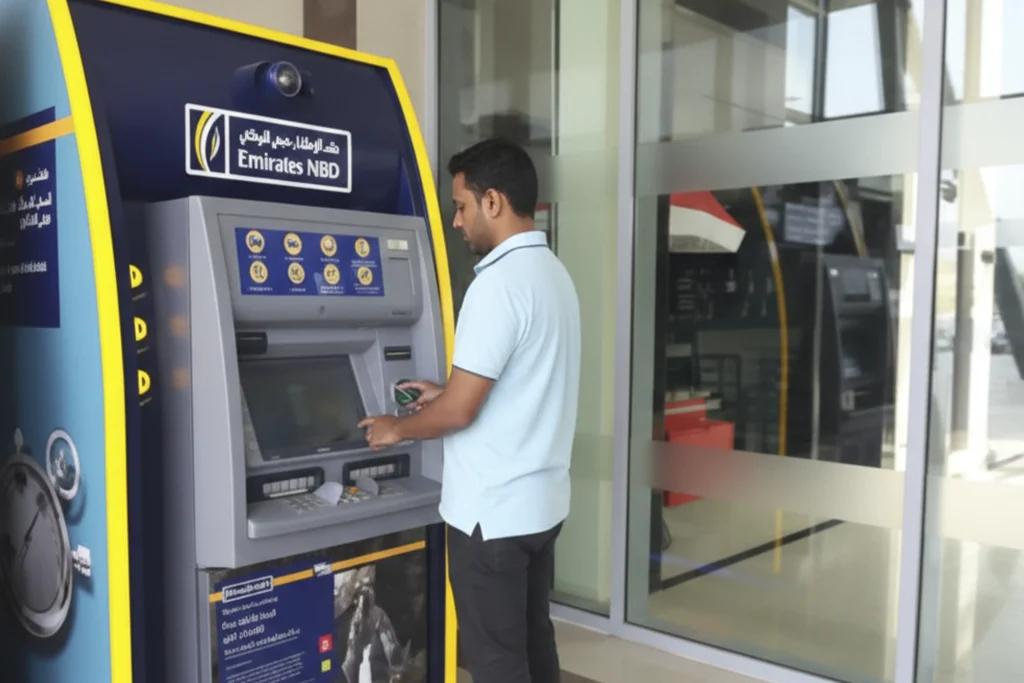
Important note: To minimize fees, withdraw larger amounts less often, check your bank’s international charges, and use ATMs from reputable banks.
Currency Exchange Offices
Dubai has many well-known exchange houses, especially inside shopping malls. These often offer competitive rates and are a solid alternative for cash currency exchange in Dubai if you prefer to exchange cash.
Note: Avoid exchanging large sums at the airport unless absolutely necessary.
How to Avoid Extra Currency Fees and Hidden Charges
When dealing with credit cards in the UAE and with international banks, small choices can help avoid extra fees. Here’s how to protect your budget:
- Avoid airport exchange counters
- Always choose to pay in AED, not your home currency
- Use cards with low or no foreign transaction fees
- Withdraw cash strategically to reduce ATM charges
- Keep exchange receipts if you plan to convert leftover cash later
Tipping Culture in Dubai
Tipping in Dubai is appreciated but not mandatory. Most tips are given in cash, reinforcing the practical need to balance cash vs. card payments.
- Restaurants: 10–15% if service charge isn’t included
- Taxis: Rounding up the fare is common
- Hotel staff: 5–10 AED for bellhops or housekeeping
- Tour guides: Optional, based on satisfaction
Cash vs Card Payments in Dubai: What’s Better?
This table compares cash and card payments in Dubai, showing when each method works best and helping you choose the right approach for different situations.
| Feature | Cash (AED) | Card |
| Ease of use | Medium | High |
| Fees | None | Depends on your bank |
| Acceptance | Limited in malls | Accepted almost everywhere |
| Best for | Markets, taxis, tips | Hotels, dining, shopping |
| Safety | Lower if lost | Higher (can be blocked) |
The smartest approach isn’t choosing one methodو it’s combining both based on the situation, which is exactly how locals and experienced travelers handle payment methods in Dubai.
Practical Travel Money Tips for Dubai Visitors
These travel money tips for Dubai help visitors save money, stay secure, and manage spending efficiently:
- Carry cash for one or two days only: Bring enough AED for taxis, tips, small purchases, and spontaneous market shopping. Avoid carrying your entire budget in cash to reduce the risk of loss or theft.
- Keep cash and cards in separate places: store them in different wallets or compartments. This way, if one is lost or stolen, you still have access to funds.
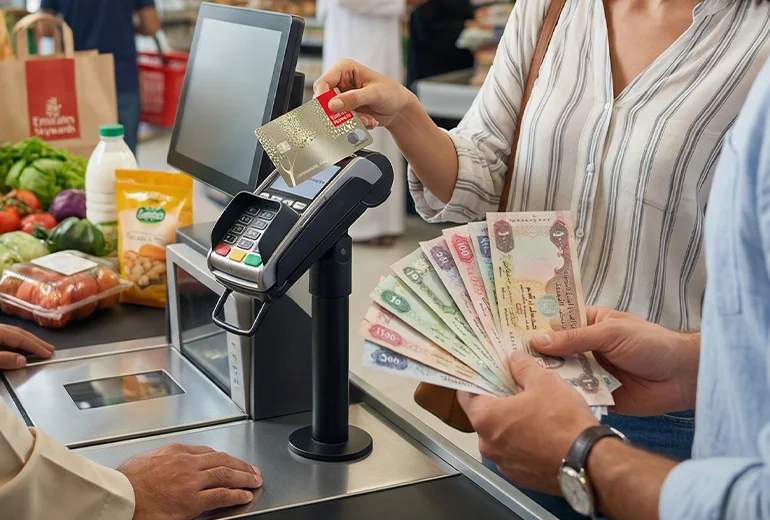
- Use cards for big purchases and cash for small ones. Pay with credit or debit cards at hotels, malls, and restaurants. Use small AED notes for taxis, local souks, tips, and small cafés.
- Monitor your spending carefully: Dubai makes it easy to overspend with luxury stores, restaurants, and entertainment options everywhere. Track your expenses daily to stay within budget.
- Avoid airport currency exchange counters if possible: Airport rates are usually less favorable than city ATMs or exchange offices. Exchange only what’s necessary upon arrival.
- Keep receipts for the leftover cash conversion: If you plan to convert leftover AED back to your home currency, keeping receipts helps ensure you get the correct amount.
Final Thoughts
So, in Dubai, which currency is used? The answer is clear: the United Arab Emirates Dirham (AED). Cards and mobile payments work almost everywhere, but cash still plays a key role in daily interactions, traditional markets, and tipping.
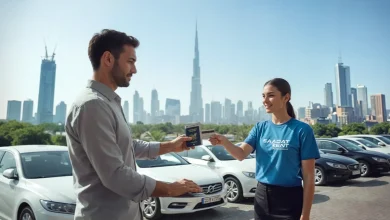
If you plan to rent a car in Dubai during your trip, paying in AED can simplify transactions and help you avoid extra conversion fees. Choosing a reliable car rental company makes the process smoother. For instance, working with a trusted provider like Saadatrent ae ensures seamless payments, faster checkouts, and peace of mind as you explore the city.
FAQ About Currency and Payments in Dubai
In most cases, exchanging money after arrival in Dubai gives you better rates. ATMs and local exchange offices usually offer more competitive rates than airport counters or foreign banks.
Credit cards are accepted in most hotels, restaurants, malls, and tourist attractions. However, small shops, traditional markets, and some taxis may still require cash.
US dollars, euros, and British pounds are the easiest currencies to exchange in Dubai. That said, withdrawing AED directly from ATMs is often the most convenient option.
Tourists generally cannot open local bank accounts. However, they can use international cards, mobile wallets, and prepaid travel cards without any issues.
For most travelers, 200–400 AED per day in cash is enough for taxis, tips, and small purchases. Larger expenses are best paid by card.
Dubai can be expensive or affordable depending on your choices. While luxury options are everywhere, budget-friendly food, transport, and shopping are also widely available.